Wednesday, December 7, 2011

Sunday, December 4, 2011
Ceramic Annual of America

Ceramics Annual of America is an exciting opportunity to explore contemporary ceramic artists. Exhibitions are presented on behalf of educators, curators, and artists who want to invest in the future of ceramic arts by focusing on work by current artists. The event is held at

Above: Steve Allen-Acetylene

David Kuraoka- Red Line Mango
Jeff Downing - The Keeper
Wandering through the cubicles housing each artist work produces a certain dream-like state. Each space projects a different presence, personality, emotion, and feeling. All of which coalesce into a surreal experience. Memories, history, and creativity all coexist under one roof.

Rodrigo Lara - Transformation
One artists showing at

Zhenhua Jin - Imperishable Vitality
One of the most impressive forms I witnessed at the show was by a Chinese artist, Zhenhua Jin. Smooth forms were waffer thin, with complex curves, folds, and distortions executed in a most elegant fashion.

Left: Sized 2 - Ryan Hurst
Right:Evil Necessity- Ryan Hurst
Ryan Hurst’s pottery collection consisted of neo-Roman style urns and vases with American history painted onto the surface with dark under glaze. American heritage are a central theme to
Is there a Problem Captain? Jon Gariepy
Another artist that received merit at the show was Jon Gariepy. Chunky robust slabs of clay fitted together help create sunken carrier ships. Gariepy, who grew up on docks throughout his life, is inspired by sea fairing vessels. Subjects include tugboats, fishing ships, sailboats and nostalgic American automobiles.
Keeper, by Joe Kowalczyk was a piece that brought me back to my childhood. This wall mounted fantasy character reminds me of child fiction creature or one of my favorite childhood stories, Where the Wild Things Are. The Keeper has an authoritative presence with crossed arms and poignant angular expression. The piece also has a trophy like quality, with the figure missing the lower extremities. Other wall mounted pieces by Joe consist of a female snowy warrior, with spear and shield: Never Again: to liberate from fear. One of my personal favorites and one, Im sure, all of us can relate to is, Ha Ha I Got Ya! This wall mounted cartoon-inspired sculptural figure is taking off a ghoulish mask. At first glance the bleak figure is cold, spooky, and emotionless but satirical and humorous at the same time. This piece is reminiscent of one of my first Halloween experiences as a child, growing up with friends and siblings who I enjoyed frightening one another.
 Left: Never Again: liberate from fear
Right: The Keeper
Bottom: Ha Ha.. I Got Ya


Saturday, December 3, 2011
Monument Proposal
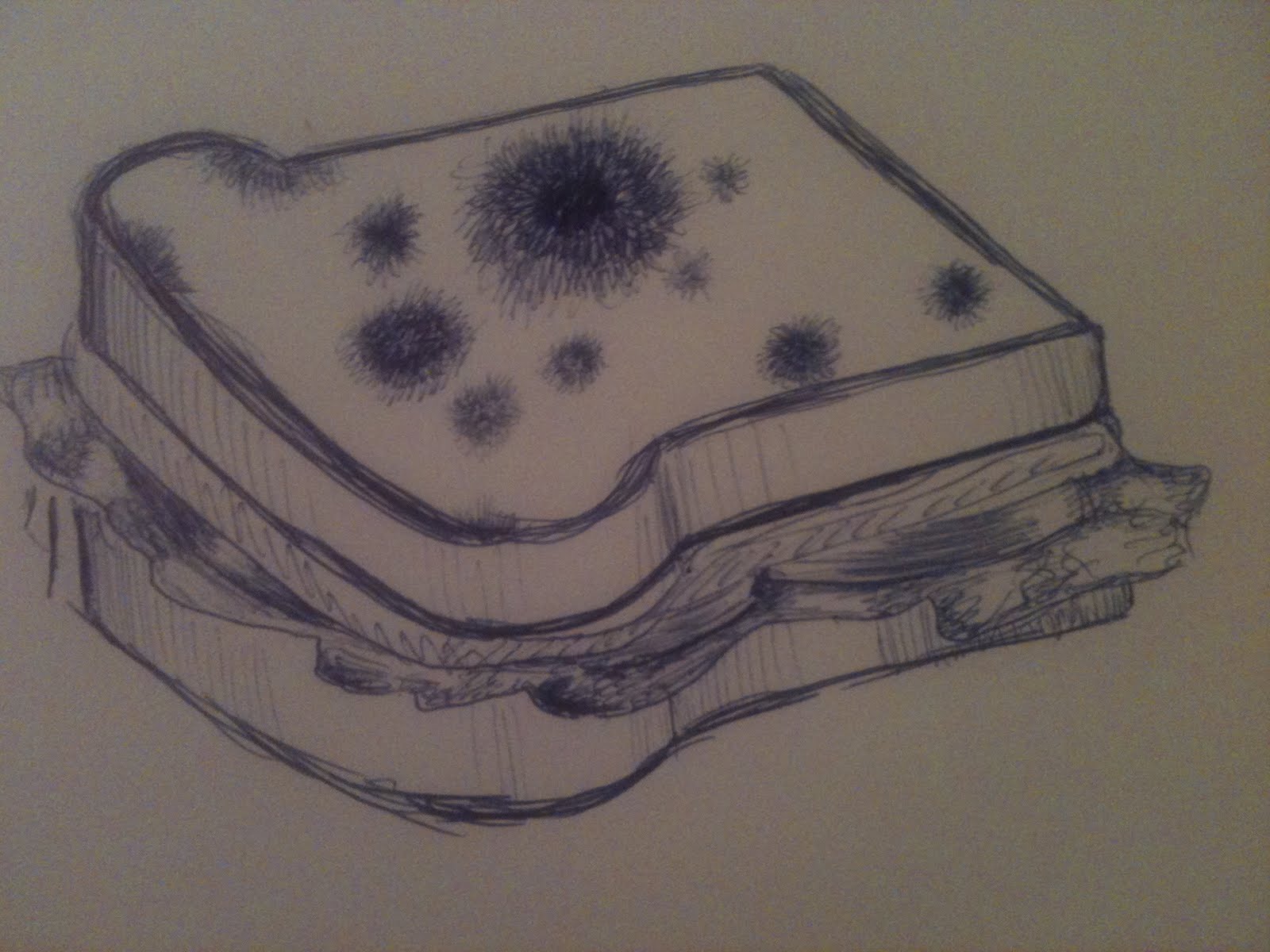
Joe Rogan has many interesting points about the nature of human kind and our reasons behind what we do and why we do it. He makes some startling comments that we may not agree with but in the same breathe, cannot ignore. I would like to create a massive sandwich 6-8 feet across. Bacon lettuce tomato mayo(spread) on white bread. The sandwich would be located on Venice beach, CA where it would be left to rot or be
eaten, and remade every year.
nImportant Cultural Roles.
nDo not look the same over time.
nHave to have memory.
Characteristics
nSpectacle
nScale
nPermanence
nRemind/Warn
nBridge Time and Place
nProminent Location
nCreate Context and Reference
Strategies and Ideas
nTake properties of monuments and contradict them. Eg large – small, hard – soft, negative space – corporeal.
nIse Shrine- Japanese Monument

Sandwich Proposal
nSemi-Annual Large Sandwich Creation
nLocation: Venice Beach, CA
n~ 6X5X5 ft
Materials: Bread, Meat, Lettuce, Tomato. Spread, permits and procedures.
Total=$450,000
Why is it improbable?
§Size
nUnsanitary
nCynical
nPessimistic
n Points out the ephemeral nature of all things
nEncourages consumption and gluttony
Ideas:

Steve Job's is one of the most extraordinary minds of our generation. He has pioneered the computer industry in hardware and software technology while building a multi-billion dollar company. He and his company, Apple, are laying the groundwork for later generations to continue in his legacy, in creating dynamic, simplistic, and superior computing machines.
My idea was to cast Jobs in porcelain sitting behind one of his first generation computers with his signature rimless glasses and balding head. I choose porcelain because of its longevity, and smooth flawless consistency. Apple hardware systems are user friendly and have simple lines and sleek design. The sculpture by Jeff Koons, Micheal and Bubbles, was a large inspiration of this piece. I would also locate this piece in his home town of Los Altos, where he started development on the first Apple computers.
 Occupy Movements have sprung up all over the continent in the last few months. I thought of an idea using large block numerical numbers that would be easily readable. Having the 1% percent character balancing on the ball whilst carrying a tremendous number ninety nine's size and shape is seemingly precarious and eventually it will fall.
 Paula Levine – Seeing the Past in Present Tense
http://userwww.sfsu.edu/~telarts/art410/readings/levine.pdf
“The Situationist strategy of détournement (a French word meaning diversion, embezzlement, or abduction) and the Dada’s and Surrealists’ playful defamiliarization were ways to derail the number state of mind, where routine flows unexamined; where the details and textures along routes from home to work and back again are hardly seen, and nothing is sufficiently strong enough to pull the traveler off track.” Monuments have the power to transport the consciousness to a new state of awareness; able to redefine ones cultural past to the immediate present. Monuments commemorate, reeducate, and give significance to the culture, nation, and region. Alternatively, historical memory can become distorted mitigate importance of the referential event.
Record of public historical memory has existed since 1776. Monuments were erected to honor living European subjects. American history continued the tradition in a new way by commemorating those who had died. “Memorials to heroes and events were meant not to revive old struggles and debates, but to put them to rest (Savage).” The similar objective of American commemoration, according to Savage, was to remember the American past while condoning a progressive present.
‘Artificial memory’ is a special skill, where ideas or concepts are transposed onto an object or space for later recollection. Monuments act in a similar way by imprinting cultural symbolism into a corporeal subject.
Early American monuments were aesthetically similar to European monuments due to many artists studying in Europe returning to
One of my favorite monuments discussed was the Jochen Gerz and Esther Shalev- Gerz,Monument against Fascism, War and Violence—and for Peace and Human Rights 1986. This, currently subterranean, rectangular monument originally stood forty feet tall and was made of aluminum and lead. Over a period of seven years the structure, it was covered with names of visitors of the site and slowly lowered into earth. A fleeting emotion stands in its place. “In the end, it is only we ourselves who can rise up against injustice.”
Ise Grand Shrine - Japanese Monument
The Ise shrine is a spiritual beacon for those who follow the Shinto religion. Followers can visit a vast number of holy shrines in the area but three important locations are ritually rebuilt every 20 years. Naiku Geku and Uji bridge have been reconstructed for centuries, and overseen by the imperial family. Rebuilding the shrine is located next to the original shrine and alternates locations. The monument signifies rebirth, cycles of life and death, and the impermanence of the corporeal. Additionally, the ceremony also was a way of passing down building techniques to new generations. I find this monument fascinating, beautiful in construction, and deeply emblematic to the Japanese culture.
Ryan Griffis – For an art against the cartography of everyday life
Although locative media purports to provide tools for the creation and reception of counter-archives, providing a seemingly emancipatory shift toward self-representation, it is necessary to consider the affective qualities of the technology itself, says Ryan Griffis.
Post Industrial Globalization has lead artists worldwide to create work that brings awareness to social and political issues. The author takes a step beyond oppressive topics to discuss ways we can positively change our world with new technology and new adaptations of locative media.
Locative media is incorporates commercial and private endeavors using geographically aware technology. According to Griffis, locative media has a knack for connecting specific experiences of “everyday life” and connecting it to a broad social experience. GPS technologies are computer systems that have to ability to coordinate location and transmit this information to other devices, like smart phones and computers. It is this media that ubiquity, the mundane, and the everyday become a part of everything and the everywhere.
“The condition of always acting tactically requires a constant state of sublimation and reactionary posturing, that while potentially liberating in the face of short term oppression, can never respond adequately to inequities.” New horizons for new technologies have opened up new possibilities for negative paradigms reaffirming “myths of everyday life.” We must creatively predicate ourselves to respond to the impact of the globalization of media.
Commercial exploitation is one way consumers have felt the changing tides. Publicly sharing information and experiences have given companies new avenues to create inequities in society. One example given by the author is the fusion of Google maps and crime demographics in
Mapping projects like Esther Polak is a great example of new locative media artist that have taken their medium in a new direction. “MILK” follows the production, manufacturing, distribution, and consumption of cheese of Latvian dairy farms through the use of GPS devices. This project brings largely foreign process, like cheese making, into a new context. Localizing production areas, acknowledgment of local history, and affirming creative processes are a few products of this type of project.
[murmur], a
Controlling society is one function of GPS technology that is also being explored. Geographic Information Systems (GIS) quantify mapping areas with environmental and social information. During the Cold War, MGIS (Military Geographic Information Systems) mapped urban housing and even disease outbreaks. GIS and MGIS systems could be then used in conjunction to create a new means to regulate social movements. “Just as walls and massive highways can serve to regulate movements between regions of a city, software, when connected to mechanical access points, can be used to regulate access to transportation, buildings and services.”
Prosumers is a new term that refers to productive consumers, of locatable content. Locative media is designed for people by people. But corporate usage has augmented locative software to analyze movements and habits. This in turn makes a simple enterprise into a malignant corporate ploy to find trends and make more revenue.
"Dark Matter: Activist Art and the Counter-Public Sphere" by Gregory Sholette
http://www.neme.org/main/330/dark-matter
Sholette attributes corporate management over the art world’s collective experience due to the threat it creates to political and symbolic power. The attributes are labeled through collective media identities given to the works. Some identities that are connected to these concepts are militarism, patriotism, community, and national pride. The author continues to draw connections to aristocratic social circles that define art history. Bourgeois culture defines our social and historical history. Bourgeois social circle, according to Sholette, pertains to those who value scholarly research and theory over creativity, form, or aesthetic. The art world attempts to incorporate fields of art and science that directly attempt to go against the institution. Because the art world strives to capitalize on this, it creates an opportunity for elitist culture to seek into the ‘dark matter’
The dark matter, in physical terms, relates to immense invisible entities that were a result of the Big Bang Theory. Dark matter is only indirectly visible. Observations of stars and galaxies point to evidence that they exist. It is believed that as much as ninety six percent of the universe consists of dark matter. Dark matter, according to Sholette’s definition, is “invisible primarily to those who lay claim to the management and interpretation of culture – the critics, art historians, collectors, dealers, curators, and arts administrators.” Amateur photographers, internet art curators, memorials, crafts, creative hobbyist all fall into the dark matter. Interestingly enough, the art world depends on the dark matter to exist. Despite corporeal matter accounting for a minuet percentage of overall space, dark matter sustains its being. “It needs this shadowy activity in much the same way certain developing countries secretly depend on their dark or informal economies.”
The essential component of the art world is the hobbyist, amateurs, and students that create the economic structure for institutionalized bourgeois art world. There is no difference between professional or amateur artists. The dark army runs administrative and fabrication technologies that sustain production. Without the dark army, the institution of art would be pointless, displacing museums, art supply stores, galleries, etc. The everyday artist is the foundation of the art world.
Amatuerization is a large component of the shadowy world. This is also a major factor that prevents the ‘Sunday’ painter from becoming an elite painter. Reproductions with relatively minor incongruencies create little value in aesthetic characteristics and capital.
Las Agencias was an anti war strategy starting at the street level. Showbus mobile and guerilla machines were a few projects.
Yo Mango is a culture jamming group that exploits protest clothing, champagne demonstrations, civil disobedience, tactile assault on globalism, and active audience participation. Construction on counter public sphere without structure but creates an understanding of the ‘dark army.’
Zines are a media tool that is creative, economical, and informative. Zines create messages for the sake of putting out a message, to say what wouldn’t be said and push boundaries. The small publications were on various controversial topicsMonday, October 17, 2011
Body Augmentation


As we grow our muscles grow and build. Working out these muscles causes stress on joints, tendins, and bones. Lactic acid build up in muscle tissue after prolong usage. With new technology opportunities we are able to modify standard biological preconditions. These devices increase bone strength while reinforcing joint movement without compromising flexablility. Devices that can also monitor blood glucose, amino acids, fat levels, lessen ailments of fatigue and reduce lactic acid build up in tissue.
Tuesday, September 20, 2011

Project Swap

I used a series of name, location and occupation generators, provided by Phillip. I compiled the information using photo shop. This project was very humerus and inventive. Thanks Phil
Monday, September 19, 2011
Art by Chance

For my random chance project I chose a simple procedure
You will need:
1 die
at least 6 different color marker, pen, or pencils etc.
paper of any size or shape
optional- rubber band - this will help keep the pens together while you draw
Rules:
Lines that are drawn must touch at least 2 edges of the paper or the same side twice.
Lines may intersect or be parallel.
Step 1
roll the die, this number will represent how many colors you will use to make your lines.
Example. I rolled the die and got a 3 so I am going to use 3 markers, simultaneously, on the paper to create my line.
Step 2
Apply lines to paper in any fashion you like abiding by the rules above.
Step 3
repeat this process until the entire page is filled with marks or you are satisfied with the drawing.
Alternative options:
Small drawings can be added to the paper before applying lines to create a dynamic piece
Coloring in fields between lines with various colors will add vivacity to the drawing
Use as many colors as you have available
Thursday, September 15, 2011

Thursday, August 25, 2011
Steve Oscherwitz


http://www.asci.org/artikel645.html
Steve Oscherwitz is responsible for creating dynamic and metaphorical pieces were he implements his own paintings into images of cancerous cells. By using nanotechnology a painting experience could be placed inside a cellular environment. Optical tweezers can manipulate microscopic acrylic beads within the cell, the same way an artist moves a paintbrush. This, in turn, would effect chemical signaling between inter cellular and extracellular fluid patterns which could effect how the cells operate. This field combines art, science, and cancer research.
Wednesday, August 24, 2011
Studio Roosengaarde

 http://www.studioroosegaarde.net
Studio Roosengaarde is a sensible, modern company with mind numbing interactive pieces. Each high tech micro chip installed on these lights engage high speed computers to switch the lights intensity depending on movement and surrounding noises. This type of environmental technology give the participant a glimpse into our interactive technology future.
Richard Brown - Mimetics
mimetics.com
Richard Brown is head of the Mimetics, a cybernetic and computer technology company. The pieces the company create are extraordinary, ultra modern, futuristic, and interactive.
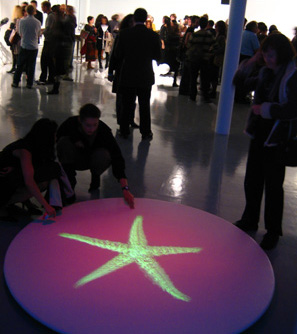
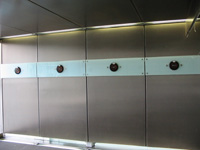
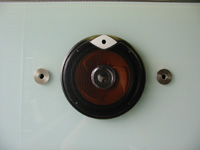
The photos below are of a special installation, The Lyre Bird. Numerous sensors respond to movement, speed and direction of participants and create an ambiance noise. The noise can go higher and deeper depending on motion and can be manipulated remotely as well. Another popular device is the Mimetic Starfish. The starfish is a interactive light simulator that responds to touch and movement.

Subscribe to:
Posts (Atom)